
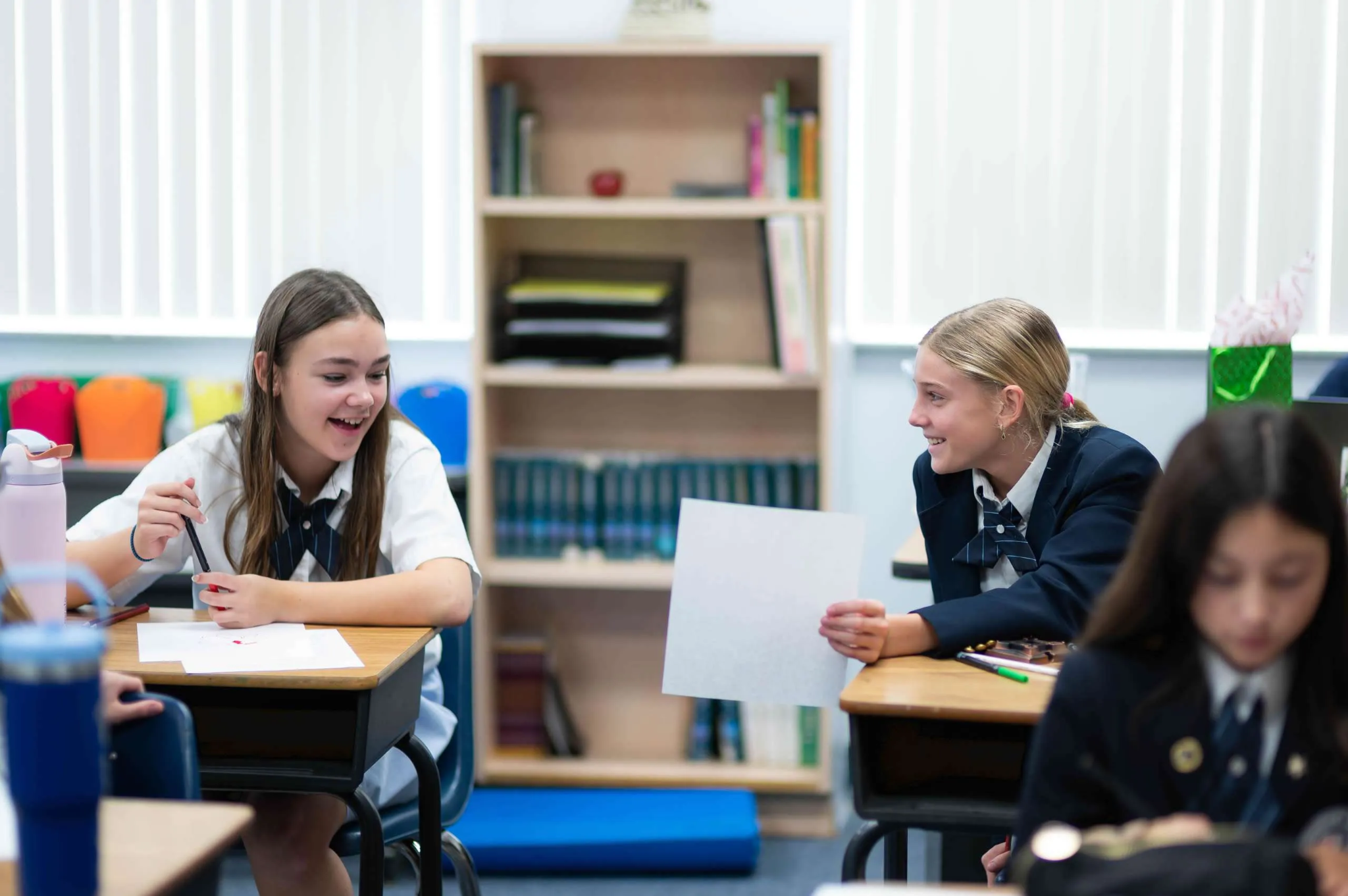
Choosing a school involves much more than comparing tuition, facilities, or a list of academic programs. Families also have to think about educational philosophy, faith formation, school culture, age range, commute, and whether the environment genuinely fits their child.
For parents exploring a private Catholic school in West Palm Beach, those decisions can become even more detailed. One school may emphasize a traditional classroom structure, another may offer Montessori-based early learning, and another may place a particular religious tradition at the center of school life.
The goal is not simply to identify the school with the longest list of features. It is to understand which environment aligns with your child, your family’s priorities, and the kind of educational experience you want over the years ahead.

In This Post
- Why School Comparisons Can Become Complicated
- What Families Should Look Beyond on Paper
- How to Evaluate Faith Formation
- Why Educational Philosophy Matters
- Why Age Continuity Can Matter
- Finding a School That Fits Your Family
Why School Comparisons Can Become Complicated
Families in West Palm Beach and surrounding communities have access to schools with different educational models, religious traditions, age ranges, class structures, and extracurricular offerings.
That variety is valuable, but it also means that two schools that appear similar online can feel very different once you visit them.
A useful first step is to separate the factors that matter most to your family.
You might prioritize:
- Catholic faith formation
- Montessori-based early education
- academic rigor
- a close-knit community
- arts or athletics
- continuity from early childhood through middle school
- location and commute
- individualized attention
Once those priorities are clear, school tours and admissions conversations become much easier to evaluate.
Families from Palm Beach Gardens, Wellington, Jupiter, North Palm Beach, Royal Palm Beach, and other nearby areas may also need to balance educational fit with practical considerations such as travel time and daily routines.
What Families Should Look Beyond on Paper
Tuition, facilities, curriculum, and extracurricular activities are important, but they do not tell you everything about what your child’s school day will feel like.
During a campus visit, look beyond the formal presentation.
Notice how teachers interact with students. Observe whether children appear comfortable asking questions. Pay attention to how students move through the school and how adults speak with them.
It is also worth asking how the school supports children when they need extra help academically, socially, or emotionally.
Another useful question is how long faculty members tend to stay and what professional development is available to them. Rather than assuming that one staffing pattern automatically indicates a better school, ask how the school builds consistency and supports teachers over time.
At Rosarian Academy, faculty and staff are part of a school community focused on academic growth, faith, and character development.
How to Evaluate Faith Formation
Not every Catholic school expresses its faith identity in exactly the same way.
Parents should ask how Catholic values appear in everyday school life rather than looking only at whether religion is listed as a subject.
Questions worth asking include:
- How often do students participate in prayer or Mass?
- How is service incorporated into school life?
- How are Gospel values reflected in classroom expectations?
- What religious tradition shapes the school?
- How does faith connect with character development and community life?
Rosarian Academy was founded in 1925 by the Adrian Dominican Sisters and is rooted in the Dominican pillars of prayer, community, study, and service. Its mission focuses on educating the whole person in light of Gospel values.
That history matters because a school’s religious identity is not simply a label. It influences how the community understands learning, service, relationships, and personal growth.
You can learn more about Rosarian Academy and its Catholic Dominican identity on the school’s website.
Why Educational Philosophy Matters

Educational philosophy shapes what children actually experience in the classroom.
It affects how lessons are presented, how much independence students have, how teachers guide learning, and how children are encouraged to solve problems.
For younger children especially, parents may want to understand whether a school uses a traditional preschool model, Montessori principles, or another early-learning approach.
Rosarian Academy’s Early Childhood program is Montessori-based. The program emphasizes hands-on learning, independence, choice, practical life skills, sensory exploration, language, mathematics, and developmentally appropriate collaboration.
That distinction is important.
Rosarian should not simply be described as a “Montessori school” across every grade. Rather, its Early Childhood program uses Montessori methodology, while students continue into Lower School and Middle School programs as they progress through Rosarian.
Families interested in this approach can explore Rosarian’s Early Childhood Montessori program.
When visiting any school, ask what its educational philosophy looks like in practice.
- What does a normal classroom period look like?
- How much independence do students have?
- How do teachers respond when a child needs more challenge or additional support?
Those answers can tell you much more than a label alone.
Why Age Continuity Can Matter
Another consideration is how long your child can remain within the same school community.
Some families prefer a school focused only on preschool or elementary grades. Others value continuity across several developmental stages.
Rosarian Academy serves students from 18 months through 8th grade, including Early Childhood, Lower School, and Middle School programs.
That structure allows a child to move from the earliest school years into elementary and middle school within one community.
For parents, continuity can make it easier to evaluate a school as a long-term fit rather than making a new school decision every few years.
It also gives families an opportunity to understand how the school approaches transitions between developmental stages.
When touring a school, ask:
- How do children move from Early Childhood into Kindergarten?
- How does independence increase as students get older?
- How does the school prepare students for Middle School?
- How do faculty communicate across grade levels?
The answers can help you understand whether the school has a clear educational progression rather than simply separate programs under one name.
Community Culture Is Difficult to Judge Online
Websites can explain programs and values, but school culture is often easier to understand in person.
Spend time observing:
- how students speak to one another
- how teachers respond to questions
- whether classrooms feel calm and engaged
- how older and younger students interact
- whether families seem welcomed into the community

Rosarian describes its approach as educating students academically while also supporting faith, character, creativity, and social development.
A campus tour gives parents the opportunity to decide whether that philosophy feels visible in everyday school life.
Finding a School That Fits Your Family
There is no single private school that will be the right fit for every child.
A family may place Catholic faith formation first. Another may prioritize Montessori-based early learning. Another may want strong academics combined with arts, athletics, and a school community that continues through eighth grade.
Before scheduling several tours, write down the three or four things that matter most to your family.
Then use those priorities consistently when comparing schools.
Ask the same questions at every campus. Pay attention to both the answers and what you observe.
Rosarian Academy is an independent, coeducational Catholic school in West Palm Beach serving children from 18 months through 8th grade. Its Early Childhood program is Montessori-based, while the wider school community is shaped by the Dominican pillars of prayer, community, study, and service.
Families who want to understand whether that combination is right for their child can visit the campus and see the school environment firsthand.
You can also find Rosarian Academy on Google for location information, reviews, and directions. The school is located at 807 N. Flagler Drive in West Palm Beach. Rosarian Academy Private Catholic School West Palm Beach FL
About Rosarian Academy
Rosarian Academy is an independent, coeducational Catholic school in West Palm Beach, Florida, founded in 1925 by the Adrian Dominican Sisters. The school serves students from 18 months through 8th grade and is rooted in the Dominican pillars of prayer, community, study, and service. Its Early Childhood program follows a Montessori-based approach, while Lower School and Middle School provide continued academic, spiritual, and personal development.
Written by the Rosarian Academy Team


